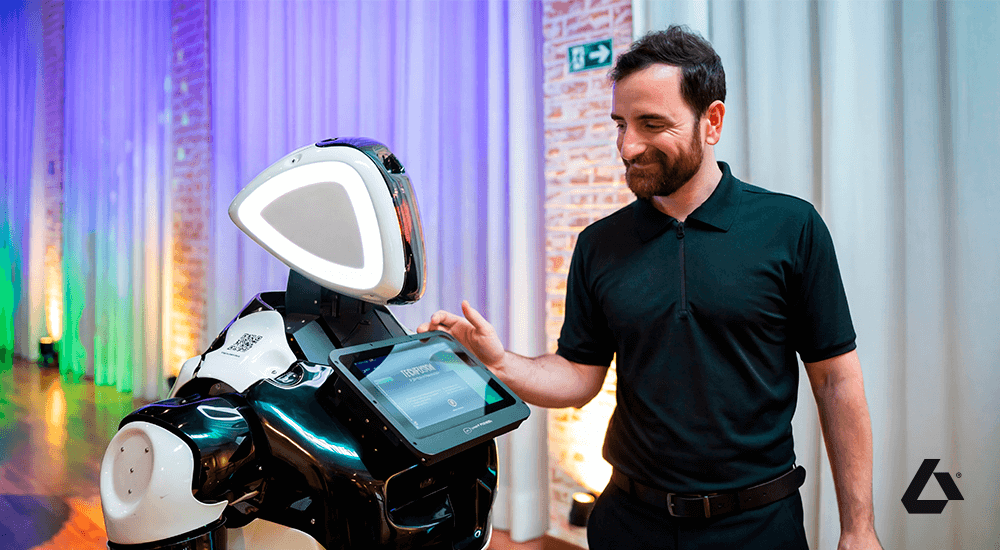
Participating in trade shows and events is a recurring strategy in the IT market, especially for those who work with complex solutions and long sales cycles.
In these environments, decision-makers, influencers, and companies that are already actively evaluating quickly gather. These are moments when strategic conversations take place outside the traditional prospecting flow, which ends up shortening paths, accelerating contacts, and expanding access to accounts that would be difficult to reach through digital channels alone.
We see this dynamic as one of the most profitable moves for commercial strategy, but only if done judiciously. Without preparation, presence becomes a cost. With preparation, it becomes pipeline .
That is why it is worth taking a closer look at the role of events within the marketing and sales plan, understanding when they really contribute to commercial growth and when they do not make sense.
Do events accelerate business or just consume the budget?
To answer this question, one key point is worth noting: trade shows and events do not create demand on their own. They amplify commercial structures that are already in place.
Without a commercial structure and clear positioning, the event generates movement but does not generate contracts. The difference lies in two basic points: clarity about the ideal customer profile (ICP) and operational alignment between marketing, inside sales, and sales. With these elements, the event anticipates relevant conversations; without them, it only produces a volume of contacts without context.
What determines whether investing in IT trade shows will translate into business opportunities is how things are handled before, during, and after the event.
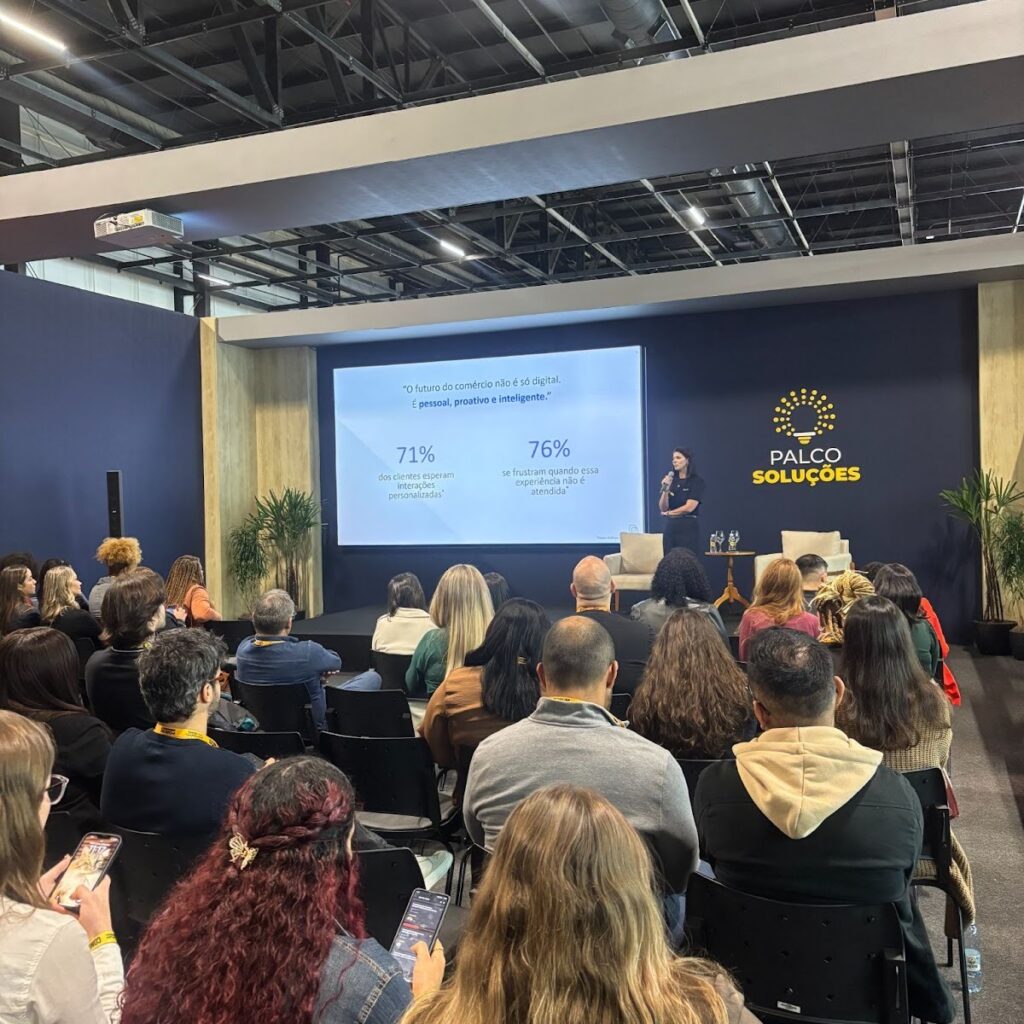
PayPal Trade Show
Before: What needs to be defined for the event to work?
Much of the frustration companies experience with technology events does not arise at the booth, but rather in decisions made beforehand. Participation is confirmed, investment is approved, but planning is limited to logistics, institutional material, and brand presence. However, the critical point lies elsewhere.
Before the event, you must:
- Identify accounts that justify the effort, based on the ICP (ICP = ideal customer profile: industry, size, technology in use, purchasing maturity);
- Map decision-makers and influencers within these accounts;
- Define the specific message for each persona;
- Establish clear business objectives: executive meetings, technical demonstrations, solution validation, or identification of budget windows.
Once these steps have been completed, the event ceases to be a showcase and begins to operate as a controlled B2B prospecting environment, with prioritized meetings and opportunities for advancement.
In complex sales cycles, this step is not optional. It is what separates institutional presence from actual pipeline generation.
During: transform noise into signal
Technology events bring together many people, many conversations, and many stimuli at the same time. The difference between those who convert and those who don't lies in the discipline of transforming each interaction into useful data.
In practice, this means recording what matters in each conversation: what challenge was mentioned, what the priority of that account is, what position the interlocutor holds in the decision-making process, and what next step makes sense.
These fields must be entered into CRM the time of the event, not afterwards. With this information, it is possible to decide right there and then whether the account enters active qualification, segmented nurturing, or priority scheduling for the field team.
Shorter conversations, but rich in context, generate more value than dozens of contacts with no potential. The operation that advances this reading transforms the event into real commercial input.
After: the post-event that generates pipeline or kills the opportunity)
Most projects that "failed" in IT events did not fail due to a lack of market interest: they failed due to a lack of post-event methodology. Delayed follow-ups, generic messages, and transferring contacts without context are practices that quickly cool opportunities.
Generic approaches that are disconnected from face-to-face conversations ignore context and disrupt the logic built up during the event. When this happens, contact cools off and investment loses momentum.
An effective post-event has clear flow, priorities, and SLAs: initial screening within 48–72 hours, nurturing sequence with content relevant to the identified pain point, active qualification by inside sales with objective criteria (timing, budget, authority), and handoff to the sales team with complete context, i.e., not just a list of names.
🔔 This cadence turns conversations into measurable opportunities.
The fear of being left out
Many leaders in the IT market have a legitimate concern: "if we're not there, we'll lose business." Have you ever felt this way? It's valid. Events bring together partners, competitors, and customers, and not attending can reduce visibility. Still, not every event is the best path at all times.
When the decision is guided by objective, execution capacity, and follow-up plan, attendance is assured. Otherwise, it is preferable to prioritize formats that offer a better cost-benefit ratio, such as executive meetings, mini-sessions, or closed meetings.
With experienced advisors, the risk decreases. Participation is no longer a leap in the dark, but rather a calculated decision, aligned with the company's commercial maturity and growth strategy.
Events only accelerate results when they are part of an integrated operation.
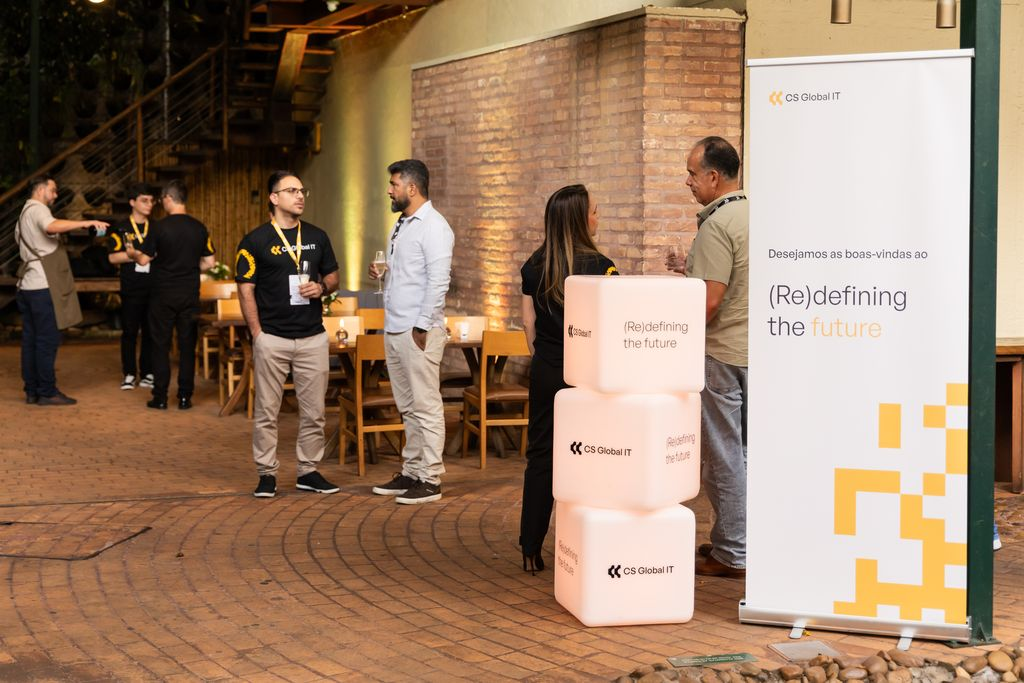
New brand launch event | Organization: Lean Sales
When events are handled with this level of maturity, they cease to be isolated initiatives and begin to operate as natural extensions of the commercial strategy. It doesn't matter if the format is a large trade show, an executive dinner, a technical workshop, or a sales kickoff: what supports the result is method, continuity, and correctly reading the moment for each account.
If your question today is not "to participate or not to participate," but rather to understand when and how events can really contribute to the pipeline, that is already a sign of commercial maturity.
It is with this logic in mind that Lean Events operates. The operation was created to structure events as active channels for generating demand, connecting planning, execution, and post-event activities to pipeline . Each action is designed to generate context, deepen relationships, and keep the conversation going (before, during, and after the meeting).
Talk to our team and see how to turn events into real business opportunities.